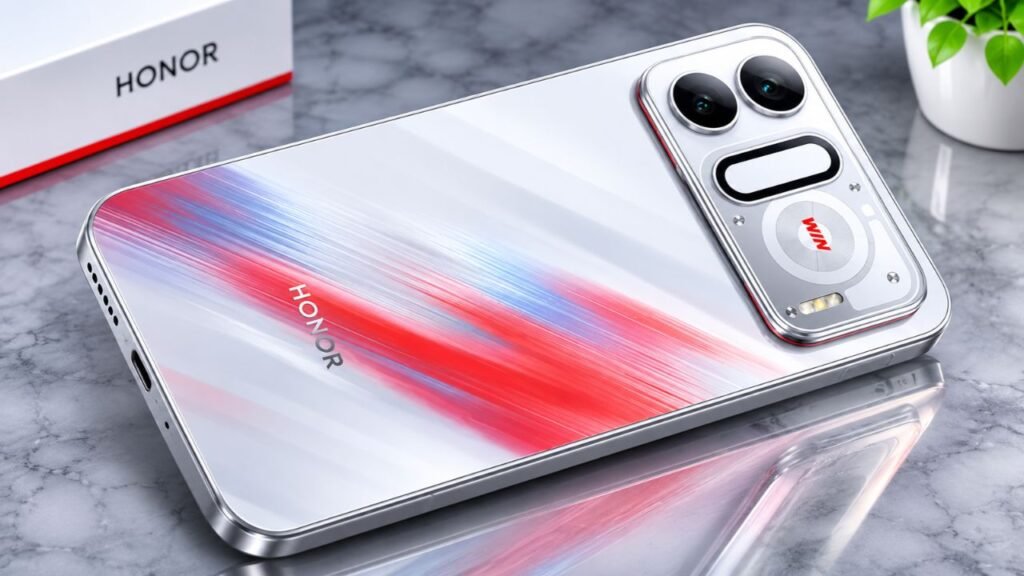
Honor is reportedly testing a smartphone with a massive battery capacity of between 14,000mAh and 15,000mAh, potentially bringing a new level of battery endurance to the smartphone market. According to well-known tipster Digital Chat Station on Chinese social media platform Weibo, the company’s upcoming device could be designed to deliver up to one week of battery life on a single charge. If the reported development becomes a reality, it could represent a significant shift in smartphone battery technology, where most mainstream devices still offer capacities below 6,000mAh. However, the phone remains in the testing stage, and Honor has not officially confirmed its development, specifications or launch plans.
Smartphone battery capacities have increased gradually in recent years, particularly with the introduction of newer battery technologies such as silicon-carbon. However, devices with batteries exceeding 10,000mAh remain relatively uncommon. Honor’s reported experiment could push those limits further and attract users who prioritise long battery life over slim designs or lightweight construction.
Honor Battery Leak
The latest information comes from Digital Chat Station, a tipster known for sharing details about upcoming smartphones and mobile hardware developments. As reported by NotebookCheck, the tipster has suggested that Honor is testing a smartphone battery with a capacity ranging from 14,000mAh to 15,000mAh.
The most interesting part of the report is the claimed battery endurance. The device is reportedly being developed around a major selling point: up to one week of battery life on a single charge. This would be significantly longer than the typical battery performance offered by current mainstream smartphones.
For comparison, many popular smartphones still come with batteries below 6,000mAh, while only a limited number of devices cross the 10,000mAh mark. A 15,000mAh battery would therefore represent a substantial increase in capacity compared with conventional flagship and mid-range phones.
However, it is important to understand that the reported device has not been officially announced. The information is based on a leak rather than a confirmed product announcement from Honor. Although Digital Chat Station has a reasonable track record, leaked specifications can change during development, and not every tested product eventually reaches the market.
Why Honor Makes Sense
Honor would not be an entirely surprising company to experiment with such a large smartphone battery. The brand has already introduced devices with unusually high battery capacities, showing that it is willing to explore battery technology beyond the limits of conventional smartphones.
One example is the Honor Win RT 2 gaming phone, which comes with a 12,070mAh battery. This is already considerably larger than the batteries found in most mainstream smartphones.
Moving from a 12,070mAh battery to a capacity of 14,000mAh or 15,000mAh would represent an additional increase of approximately 2,000mAh to 3,000mAh. While that is a substantial improvement, Honor’s previous work with high-capacity smartphone batteries makes the reported experiment seem technically plausible.
The company’s experience with large-battery devices could also give it an advantage when working on battery integration, internal component placement and power management. However, fitting such a large battery inside a smartphone is not simply a matter of increasing its capacity.
Manufacturers must consider the dimensions of the battery, the available internal space, heat management and the weight of the finished device. These factors can make the development process considerably more complicated than increasing battery capacity on paper.
One Week Battery Life
The reported one-week battery life is arguably the most interesting part of Honor’s possible smartphone project. A device capable of lasting seven days between charges could appeal to people who frequently travel, work outdoors or spend extended periods away from charging facilities.
It could also benefit users who rely heavily on their smartphones throughout the day. Activities such as watching videos, browsing the internet, using navigation applications, taking photographs and playing games can place considerable demands on a phone’s battery.
A 14,000mAh to 15,000mAh battery would offer substantially more energy capacity than the batteries found in many conventional smartphones. However, actual battery endurance would depend on several factors, including the processor, display technology, network connectivity, background applications and software optimisation.
This is where Honor’s MagicOS software could play an important role. Efficient power management, background application controls and system-level optimisation could help the device make better use of its large battery.
According to the report, the one-week battery life claim is a central part of the phone’s expected positioning. However, it remains unclear whether this would apply to normal everyday usage, lighter usage or a particular testing scenario.
Battery life claims should always be considered in the context of actual usage. A smartphone may last considerably longer when used mainly for calls and messaging than when running demanding games or streaming high-resolution videos for several hours.
Silicon Carbon Technology
The increasing use of silicon-carbon battery technology has helped smartphone manufacturers explore higher battery capacities without necessarily making devices as large as traditional battery designs would require.
For years, smartphone battery capacities remained relatively stable, with manufacturers focusing on improving processors, displays, cameras and charging speeds. More recently, advances in battery technology have allowed companies to introduce phones with significantly larger batteries.
Silicon-carbon technology uses silicon-based materials in the battery anode to increase energy storage potential. This can help manufacturers achieve higher energy density, allowing more battery capacity to fit into a given amount of space compared with some conventional designs.
This development has become particularly relevant as consumers increasingly expect smartphones to last longer between charges. Large batteries are especially attractive to mobile gamers, frequent travellers and users who depend on their devices for work.
Although the reported Honor device could benefit from advances in battery technology, the exact battery chemistry and construction have not been confirmed. It would therefore be premature to assume that the phone will use a specific battery configuration.
Battery Size Challenges
Despite the potential benefits, a smartphone with a 15,000mAh battery would come with several engineering challenges. The biggest concern is how Honor could fit such a large battery into a device without making it excessively thick or heavy.
Smartphone manufacturers typically try to balance battery capacity with portability. Consumers expect modern phones to offer large displays, advanced cameras and powerful processors while remaining comfortable to hold and carry.
A much larger battery could make it difficult to maintain that balance. Depending on the battery’s energy density and internal design, the device might need a thicker body or additional space inside the chassis.
Weight could also become a major concern. A heavier smartphone may offer excellent endurance, but it could be less comfortable for people who use their devices for extended periods or prefer lightweight handsets.
There could also be compromises in other hardware areas. Manufacturers need to allocate internal space for the display, motherboard, cameras, speakers, cooling components and other essential parts. Giving a larger share of that space to the battery could affect the design or configuration of other components.
Thermal Management Issues
Thermal management could be another important challenge for Honor. As highlighted in NotebookCheck’s coverage of the report, a smartphone with such a large battery may require more complicated thermal management arrangements.
Battery temperature is an important factor in smartphone safety, charging performance and long-term battery health. Manufacturers must ensure that the battery operates within appropriate temperature limits during everyday use and charging.
A large battery also needs to work alongside other heat-generating components, including the processor and charging hardware. Gaming, video recording, navigation and fast charging can all contribute to heat generation inside a smartphone.
Honor would therefore need to consider how the battery, processor and cooling system work together. The challenge is not only fitting the battery into the device but also maintaining reliable performance and safe operating temperatures.
These engineering considerations could influence the phone’s final thickness, weight and overall hardware configuration. They may also explain why the company is reportedly still testing the device rather than preparing an immediate commercial launch.
15,000mAh Comparison
If Honor eventually introduces a smartphone with a 15,000mAh battery, it would stand out against many current flagship devices. The reported capacity would be approximately three times that of the Samsung Galaxy S26 Ultra, according to the comparison highlighted in the original report.
The Galaxy S26 Ultra has been praised for its battery performance, with its review describing the endurance as fantastic. A battery three times larger in capacity could potentially provide considerably more usage time, although actual results would depend on the complete hardware and software configuration.
Here is a simple comparison based on the battery figures mentioned in the report.
| Smartphone | Battery capacity | Status |
|---|---|---|
| Honor reported test phone | 14,000mAh–15,000mAh | Reportedly under testing |
| Honor Win RT 2 | 12,070mAh | Launched device |
| Samsung Galaxy S26 Ultra | Approximately 5,000mAh | Reference device |
The comparison highlights how ambitious Honor’s reported battery project could be. However, battery capacity alone does not determine which smartphone will deliver the best real-world endurance. Display efficiency, chipset power consumption and software optimisation all play important roles.
Could Replace Power Banks
A smartphone with a 14,000mAh or 15,000mAh battery could also become useful for people who regularly carry a power bank. With such a large capacity, the device might offer enough endurance to reduce the need for frequent charging during short trips or extended outdoor activities.
This could be particularly useful for people who travel frequently, work in remote locations or spend long hours away from electrical outlets. Instead of worrying about charging their phones every evening, they could potentially go several days between charging sessions.
There is also a possibility that a device with such a large battery could support charging other gadgets, although this feature has not been confirmed. Some phones and feature phones already offer power-sharing capabilities that allow users to charge smaller electronic devices.
For now, there is no information suggesting that Honor’s reported smartphone will include a built-in power bank feature. Its main reported focus is battery endurance rather than reverse charging or additional accessories.
Feature Phone Comparison
The idea of a smartphone lasting an entire week on a single charge brings back memories of traditional feature phones, particularly older Nokia handsets. These devices were known for their basic functions and impressive battery endurance, often lasting several days without requiring a recharge.
Modern feature phones continue to focus on long battery life. For example, the Nokia 300 Charge is described as offering up to 40 days of standby time and also includes a power bank function for charging other gadgets.
However, standby time and active usage are two different measurements. A phone can remain switched on for an extended period when barely used, but its battery will drain much faster when the display, mobile data and applications are being used regularly.
Honor’s reported one-week battery target would therefore be particularly interesting if it can deliver several days of practical everyday usage rather than relying mainly on standby performance.
Whether the company will include features similar to those found on long-lasting feature phones remains unknown. The current leak does not confirm whether the device will support charging other gadgets or offer any special power-sharing functionality.
Global Launch Possibility
Another important question is whether Honor plans to launch this high-capacity battery smartphone outside China. At present, there is no confirmed information about its global availability or potential launch markets.
Digital Chat Station’s report only suggests that Honor is testing the device. Even if the smartphone moves beyond the testing stage and eventually reaches the market, there is no guarantee that it will receive a global launch.
It is possible that the company could initially introduce the device in China, where it may evaluate customer interest before considering wider availability. However, this is only a possibility, not a confirmed launch strategy.
For consumers in markets such as India, Europe and other regions, the absence of official launch information means there is currently no confirmed availability timeline.
Potential buyers should also avoid relying on unofficial launch dates or expected prices until Honor shares an announcement. The device’s final specifications, design and commercial positioning could change during development.
What Happens Next
Honor’s reported 15,000mAh battery experiment could become an interesting development for the smartphone industry if the company manages to turn it into a practical commercial product.
For the project to succeed, Honor will need to balance battery capacity with portability, thermal performance and everyday usability. A phone that lasts seven days but is excessively thick or heavy may not appeal to mainstream consumers.
The company will also need to ensure that the battery works efficiently with the display, processor and software. Good MagicOS optimisation could be just as important as the battery’s physical capacity when it comes to delivering longer real-world endurance.
If Honor successfully demonstrates that a 14,000mAh to 15,000mAh battery can fit into a reasonably practical smartphone, other manufacturers may also explore similar designs. This could encourage more competition around battery capacity and smartphone endurance.
Final Thoughts
Honor’s reported experiment with a 14,000mAh to 15,000mAh smartphone battery could signal an interesting direction for the next generation of mobile devices. With the company already associated with high-capacity battery phones such as the Win RT 2, the possibility of pushing capacity even further is not entirely surprising.
The biggest attraction would be the possibility of up to one week of battery life, potentially reducing the need for frequent charging. However, battery size, device weight, thermal management and hardware compromises remain important challenges that Honor would need to address.
For now, the 15,000mAh Honor smartphone is only a reported testing project, not an officially announced product. Its eventual success will depend on whether the company can combine exceptional battery endurance with a practical smartphone design. If it manages to do so, the project could encourage other brands to rethink how much battery capacity future smartphones should offer.